Most people who search for "vipassana" have heard of the ten-day courses in the tradition of S.N. Goenka. They are wonderful. They have brought this practice to millions of people, offered freely, all over the world. Many of the people who come to our retreats have done one, and it helped them.
In the UK, those courses are held at Dhamma Dīpa in Herefordshire and Dhamma Sukhakārī in Suffolk, and places often go to a waiting list. So people ask me: what's the difference with your retreat? Is shorter OK? Can I mix?
Here's my honest answer.
Same root, different method
Both come from the same teaching: the Buddha's four foundations of mindfulness, the Satipaṭṭhāna. All internationally known vipassana traditions are based on it. The difference is in how the training is done.
Goenka tradition (from Sayagyi U Ba Khin, Burma): three days of ānāpāna, attention on the breath at the nostrils, then systematic body scanning, observing sensations with equanimity. Instruction is mainly by recorded audio and video.
Mahasi tradition (from Mahasi Sayadaw, Burma), which we teach: attention on the rising and falling of the belly, with gentle mental noting, rising, falling, and noting of whatever pulls the mind away: thinking, hearing, pain, liking. Walking meditation with the same precision: lifting, moving, placing. This is the method monks and nuns study at universities in Burma and Thailand.
Neither is better. They're different roads up the same mountain.
Comparison at a glance
|
Goenka 10-day course |
Our 7-day Insight Vipassana |
| Length |
10 full days + arrival and departure |
7 days, 5 full days of silence |
| Technique |
Breath at nostrils, then body scanning |
Rising and falling, mental noting, all four foundations |
| Walking meditation |
Not part of the formal practice |
Formal practice, alternating with sitting |
| Teacher |
Recorded talks; assistant teachers answer questions |
Live Dhamma talks and personal interviews with the teacher |
| Movement |
No yoga or exercise |
Daily yoga to prepare the body |
| Sitting |
Group sits up to an hour or more, "strong determination" sittings |
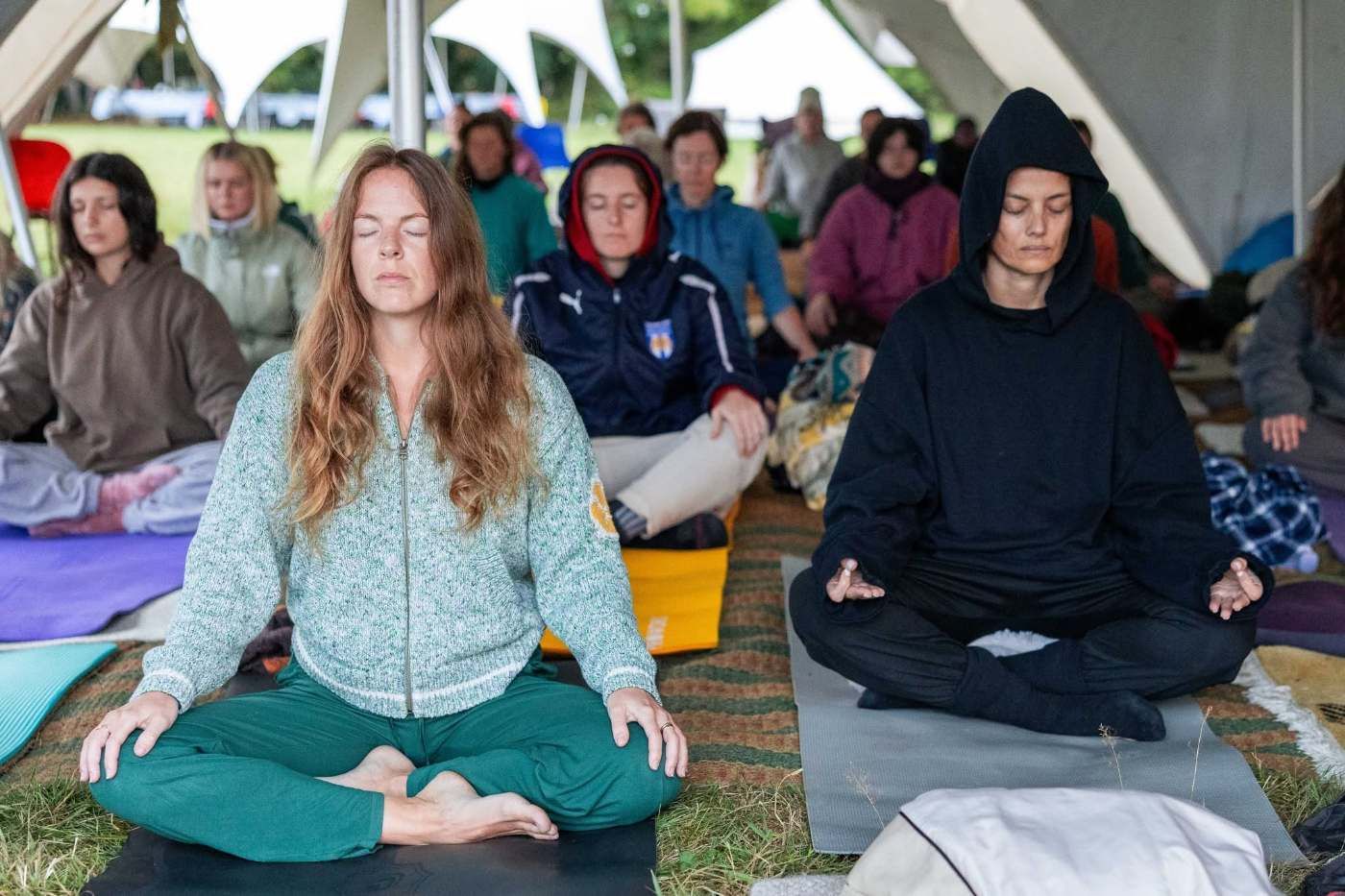
45-minute sits alternating with 45-minute walking |
| Setting |
Purpose-built centre, mostly indoors |
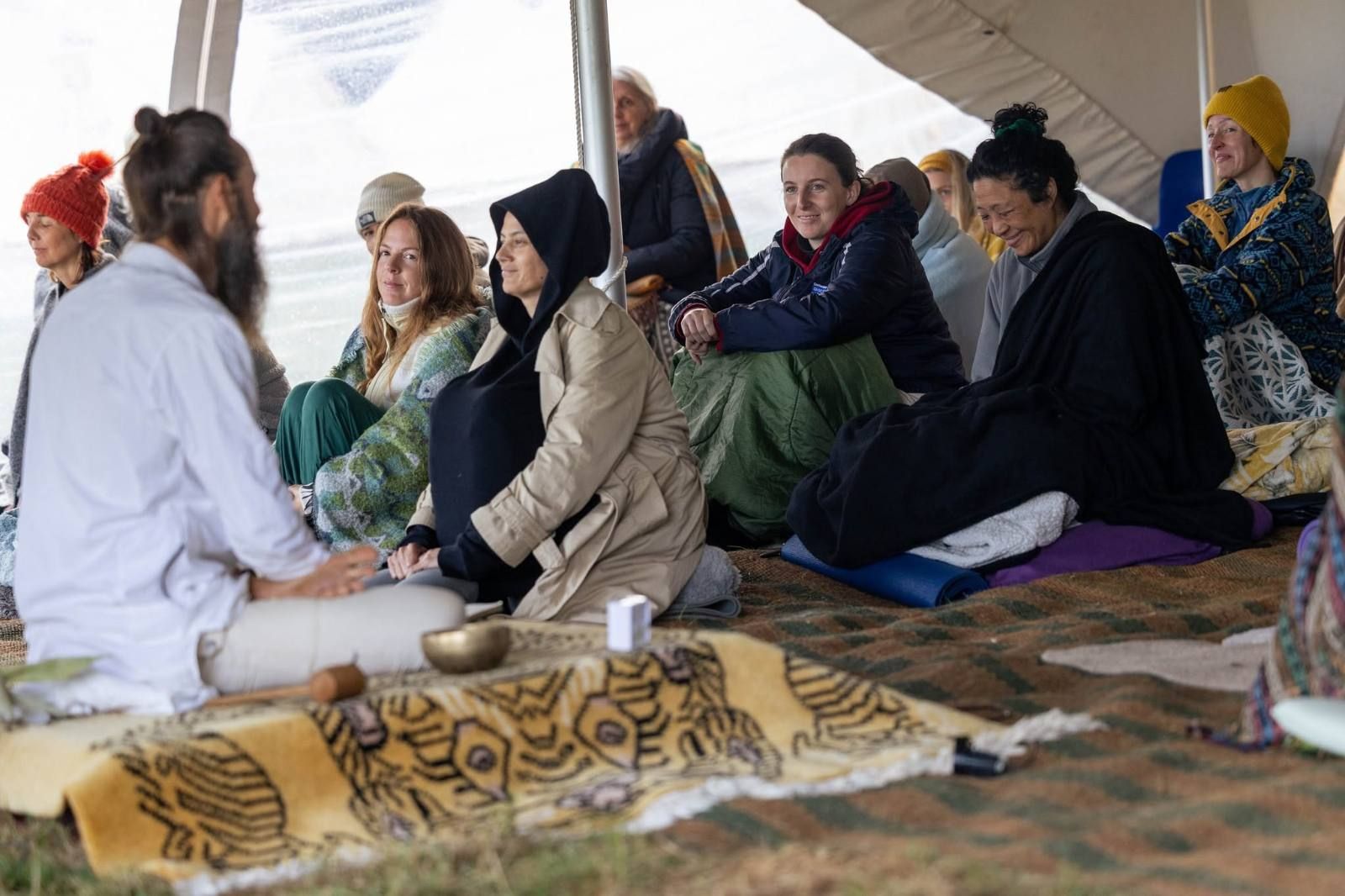
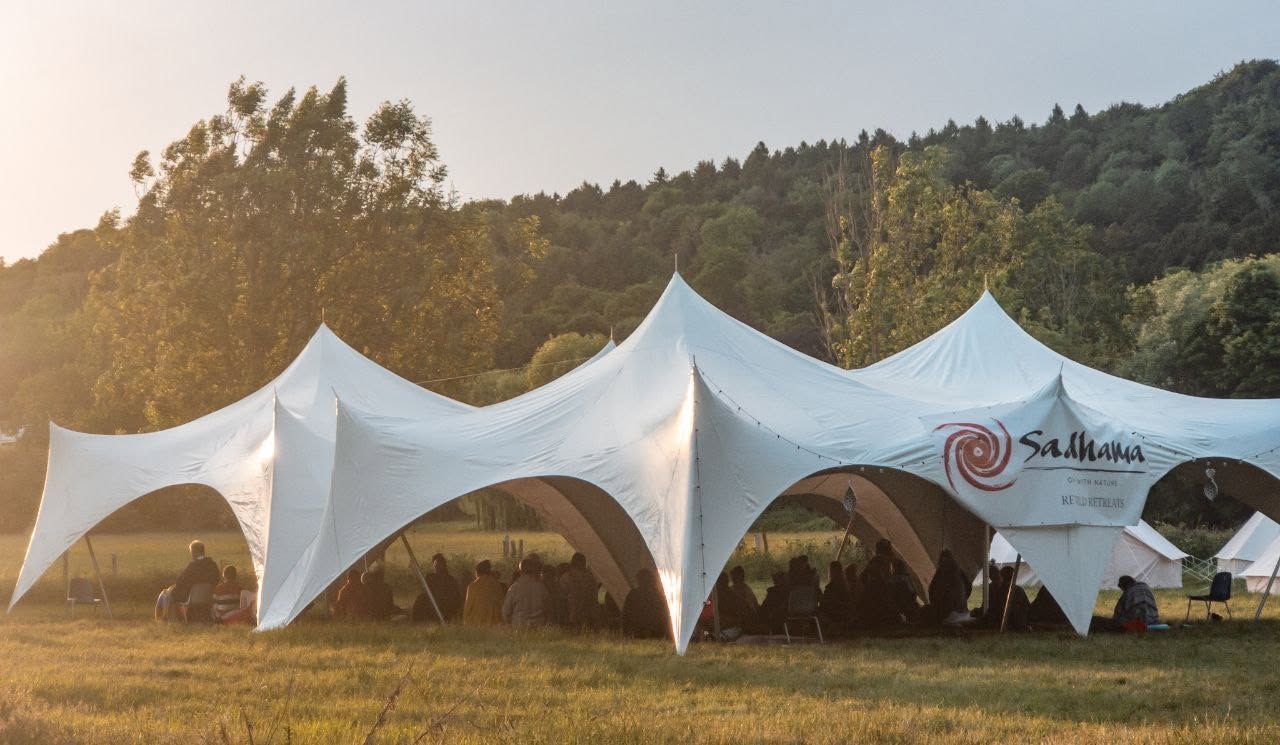
Marquee in a meadow by the Thames, camping |
| Cost |
Entirely donation-based |
Organisational fee for food and lodging; teaching for donation |
Don't mix them during a retreat
Goenka gives a lovely image: trying to ride two horses at once. Maybe yes, if you're a circus rider. For the rest of us, you fall off.
If you've done body scanning before, that experience of concentration will help you. But during our retreat, put the old technique aside and give the noting method a proper go, full power. Any meditation only works when you give it full power. Jumping between methods brings confusion very quickly.
Afterwards, at home, practise whichever one actually works for you.
Is seven days enough?
The Buddha said in the Satipaṭṭhāna that someone who develops these four foundations properly can see results within seven years, or seven months, down to seven days. Of course, that's not a promise of enlightenment by Sunday. But a week of continuous practice is enough to learn the method well and taste real concentration and insight. Many people have their first clear experience of the present moment on a seven-day retreat.
It also makes a good first step if ten days feels too much, or if you can't take that much time off.
Who might prefer which?
Choose a Goenka course if you want a fully donation-based course, a longer container, a purpose-built indoor centre, and a very standardised format you can repeat anywhere in the world.
Choose an insight retreat like ours if you'd like walking meditation, daily yoga, a live teacher you can talk to, a method you can use all day long (not just when sitting), and the countryside around you.
Many people do both, over the years. That's fine too. The Dhamma isn't a brand.
If you're curious, read what a vipassana retreat is, learn the noting method, or see our 2027 retreats.