
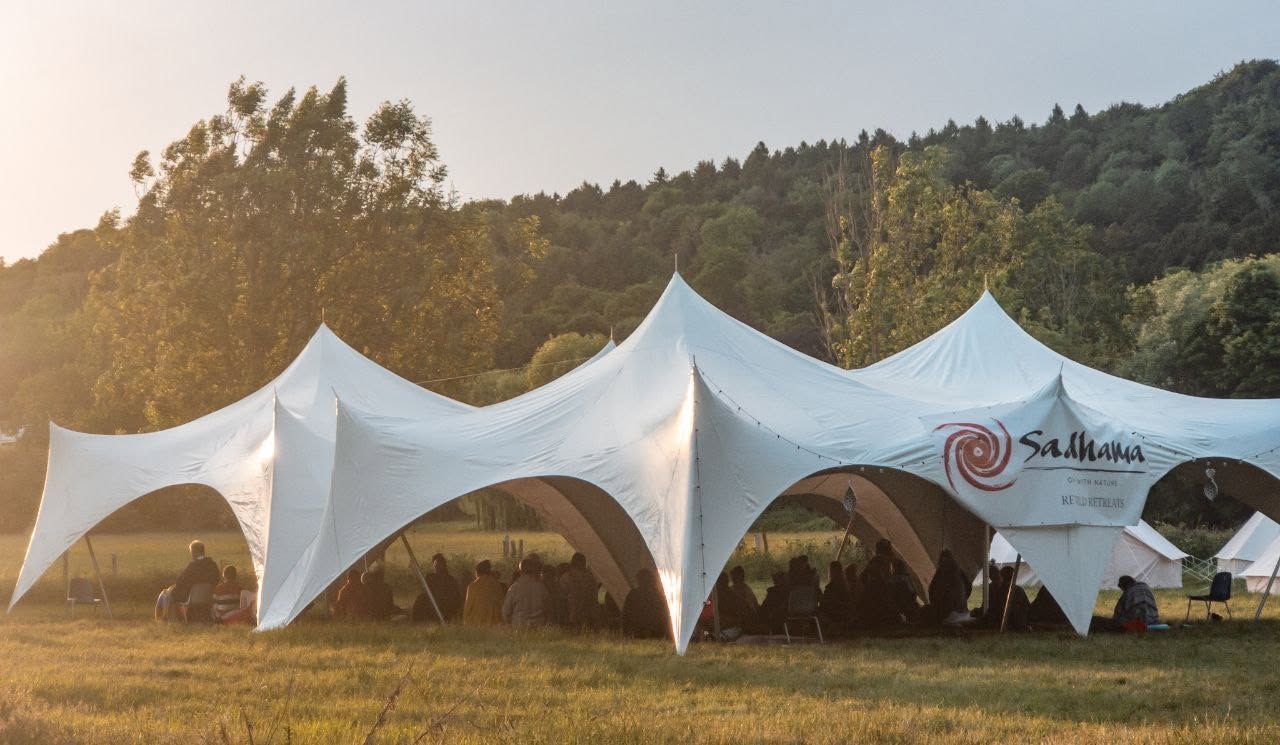
A Silent Retreat Near London: Vipassana on the Thames in Oxfordshire
Looking for a silent meditation retreat near London? Our 7-day vipassana retreats are at Hardwick Estate in the Chilterns, 40 minutes by train from Paddington.
Read · 3 min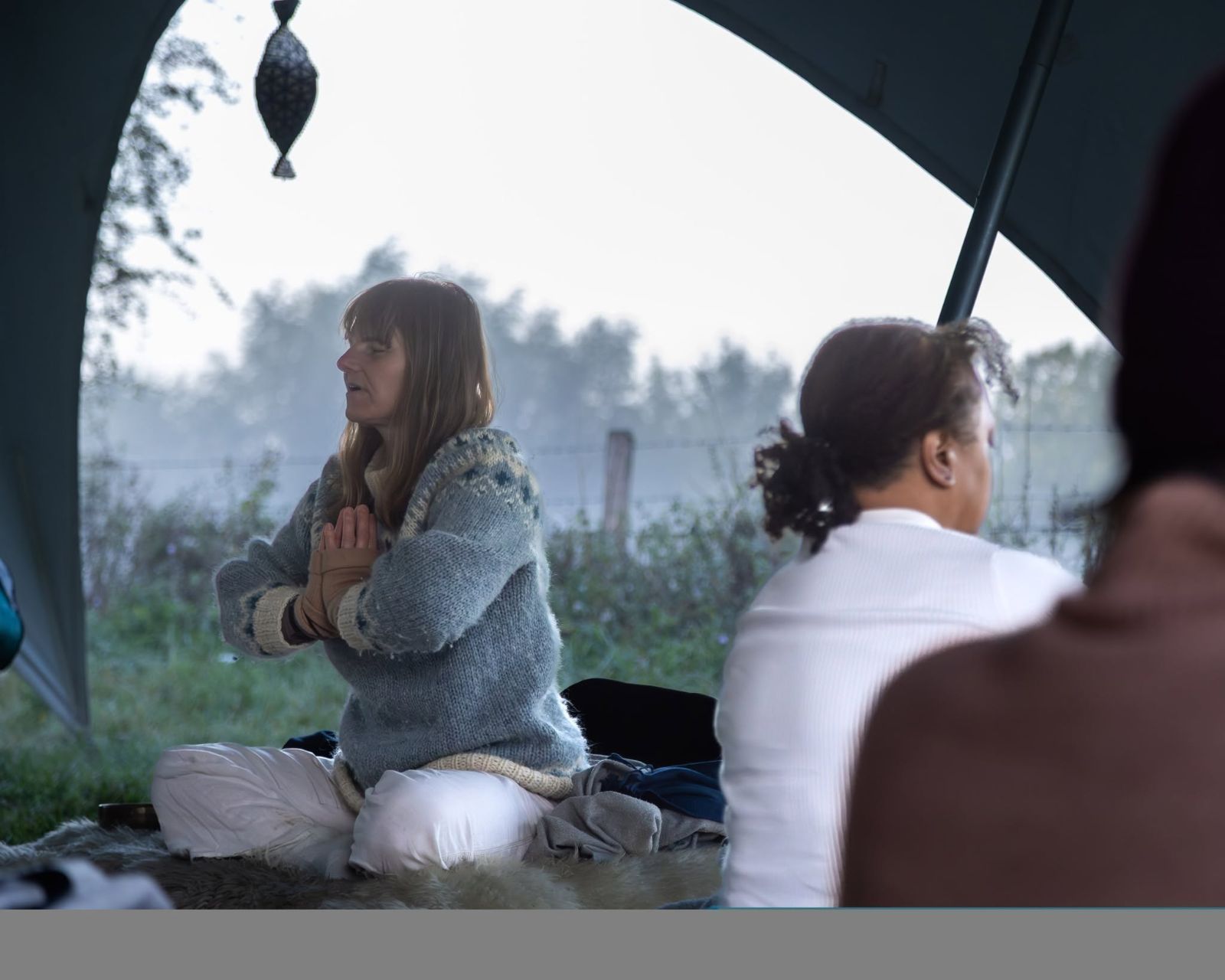
Some of you have signed up and don't quite know what you've signed up for. I can tell you. It's not a holiday. But it is a holiday from your wants.
Here is how a seven-day silent retreat usually unfolds, from someone who has sat many of them and now guides them.
You arrive, find your tent or your spot, meet the team, and hear the first talk. In the evening we take the training rules, the precepts, and noble silence begins.
There's a concept called entrainment. Two pendulums out of sync, left next to each other overnight, swing in sync by morning. We entrain to where we are. Fifteen minutes at Bank station, you take its rhythm. A few days by the river under old oaks, you take that rhythm instead.
So on day one, don't rush. The mind will be racing, wanting to get something from this retreat. See if you can just relax into it.
I won't lie to you. For most people these are the difficult days.
The body isn't used to sitting. The knees speak, the back speaks. The mind isn't used to having nothing to chew on, so it pulls everything out of its pockets: old conversations, plans, songs, food. You will drift away a thousand times in one sitting. It doesn't matter how many. Every time you notice, that noticing is the practice.
Two common troubles:
Be kind with yourself. Listen to the tone you use when you catch yourself drifting. Is it "Huh, thinking again, got you"? Or is it kind? Discipline isn't beating yourself. It's doing it when you remember.
Usually around here, the body adapts and the mind stops fighting. You start to see that the thoughts are not you. They're a random box, out of control, trying to get your attention. You can step back and watch.
This is where concentration begins. The 45 minutes goes by, boom, and you didn't notice.
Energy rises. Many people wake before the bell. On one long retreat my energy was so high, I decided: whenever I wake up, I'll get dressed and go to the hall. So one night I woke to birds that sounded like morning, picked up my toothbrush, noticed it was still wet, went to the hall anyway, and looked at the clock. 11:30 at night.
You don't need to do that. But you will feel the energy that comes from continuous practice.
At this stage, we add more objects to the noting: sounds, sensations, feelings of pleasant and unpleasant. Some people have their first real breakthrough to the present moment. It feels like a weight has gone from the shoulders. You don't have to be anybody.
On the last morning we talk about how to take the practice home, and then the silence ends. People are often surprised how gently they speak, how much they notice, how funny everything is.
Take it slowly. The world will be loud. Don't make big decisions the same day.
If you can sit for half an hour and you're willing to follow a schedule for a week, yes. Beginners are welcome on our retreats, and every group has people sitting for the first time.
Read what to bring, check the 2027 dates, or ask Ananda any question you have.
Surrender to the schedule. Gong, bong, wonderful. Go sit.
Practise this with a teacher, in silence, by the river. Seven days at Hardwick, 2027.
Book a placeHave a question about the practice? Ask Ananda, our Dhamma assistant.
Looking for a silent meditation retreat near London? Our 7-day vipassana retreats are at Hardwick Estate in the Chilterns, 40 minutes by train from Paddington.
Read · 3 min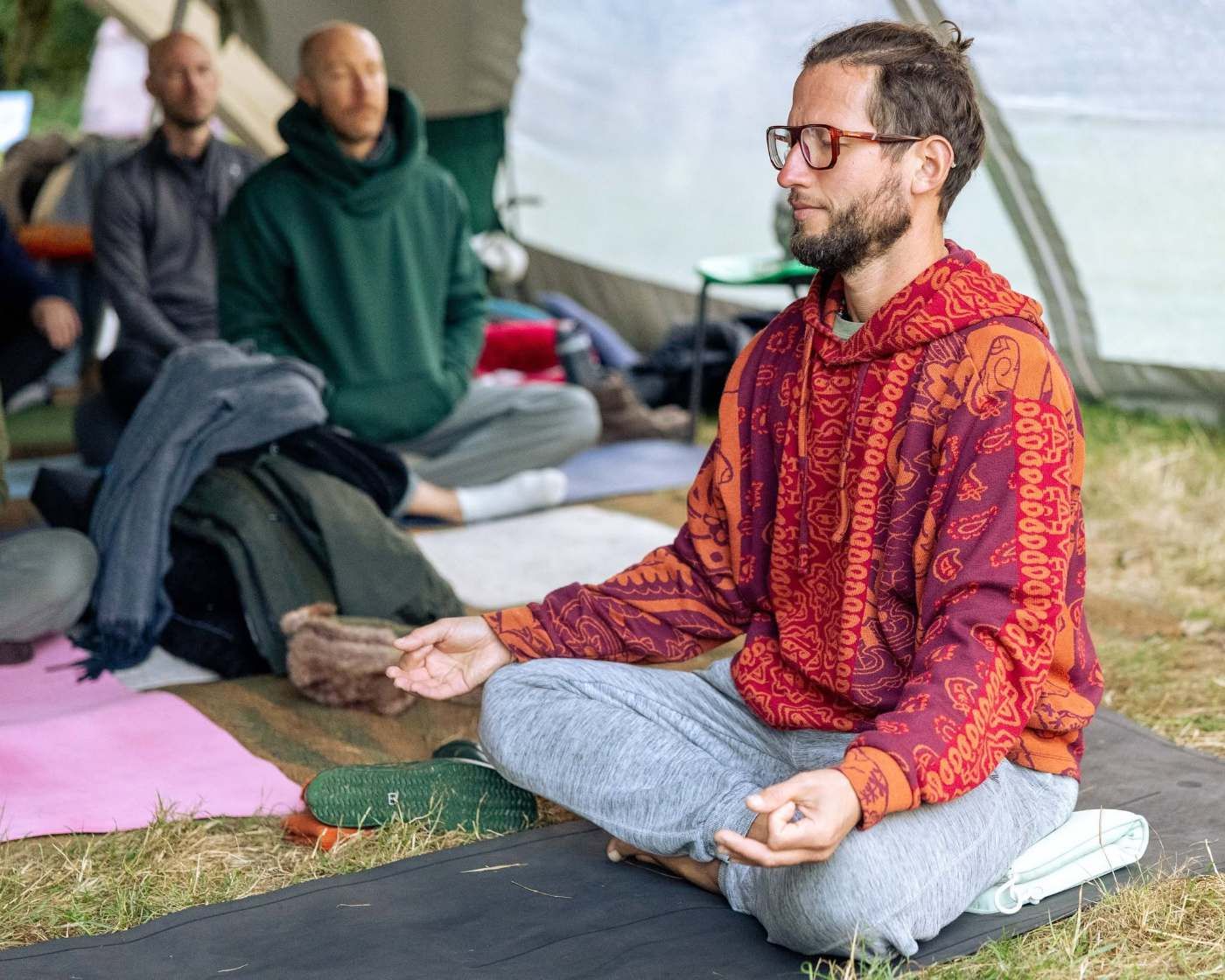
Never meditated? You can still do a silent vipassana retreat. A teacher answers the common worries: sitting, silence, emotions, sleepiness, and whether you'll "fail".
Read · 3 min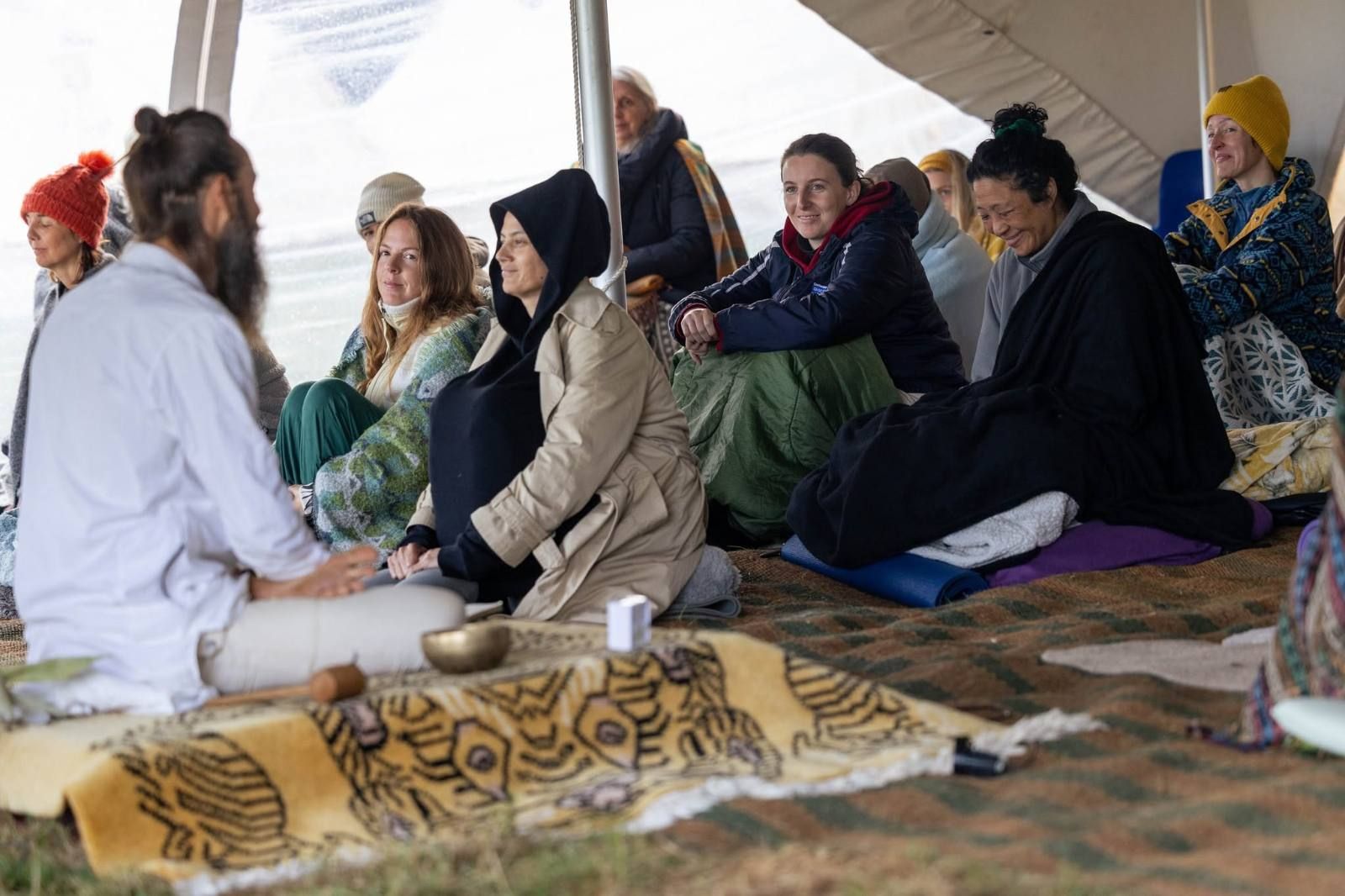
An honest, respectful comparison of the S.N. Goenka 10-day vipassana course and a 7-day Mahasi-style insight retreat: technique, schedule, teacher contact, yoga, cost and waiting lists.
Read · 3 minNew dates, early-bird places and short teachings from Dmitry, a few times a year. No spam; unsubscribe any time.