Not all meditation traditions use walking meditation. Don't think of it as a break, just to stretch your legs. In our retreats, walking is as important as sitting. In fact, most people experience the present moment for the first time during walking, and the first insights often come there.
The Buddha practised it himself. In the places where he spent his rains retreats, there were walking paths. He spoke of five benefits of walking meditation (AN 5.29): you become fit for travelling, fit for striving in meditation, and healthy; what you eat and drink is properly digested; and the concentration gained while walking lasts long.
Find your path
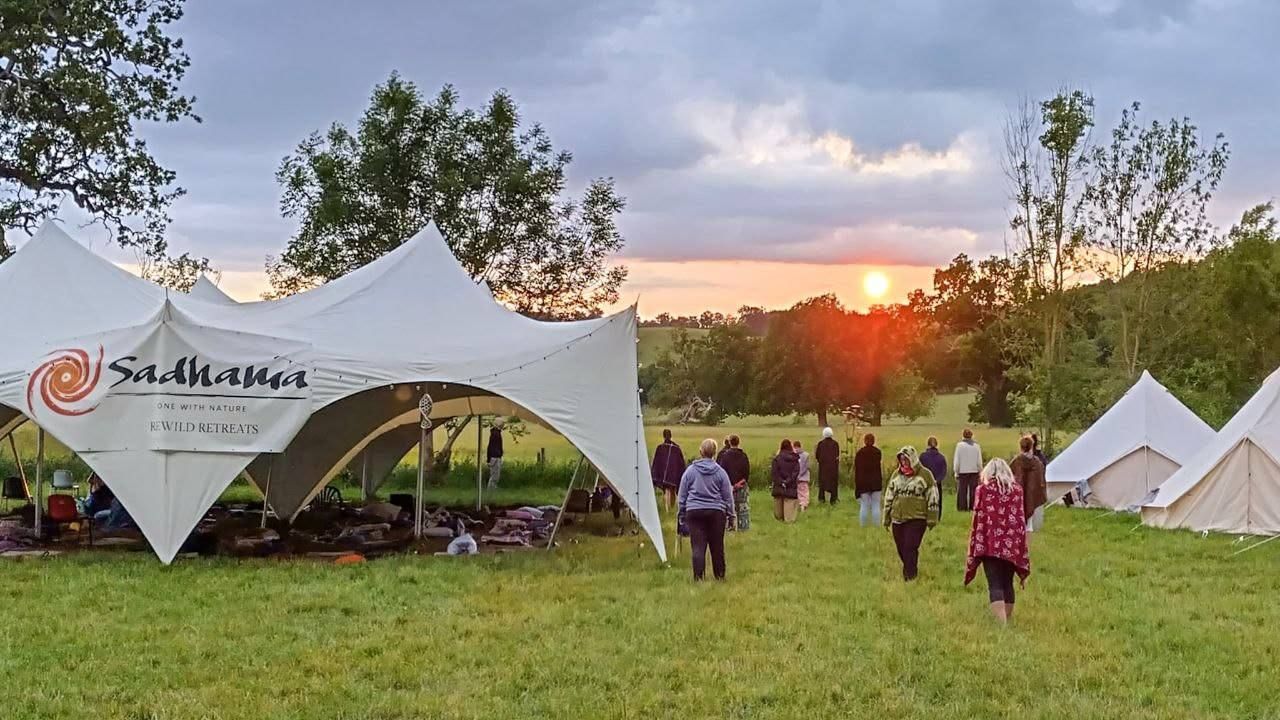
Choose a straight path of 10 to 20 steps. Indoors or outside. At Hardwick we walk on the grass in the meadow, barefoot when it's warm.
Stand at one end. Hands lightly together in front or behind. Eyes open, looking at the ground a couple of metres ahead. Not at the birds. Not at other people.
Stage 1: Left, right
Begin by noting each whole step: left… right… left… right. Walk a little slower than normal. Feel the foot as it moves, not the idea of the foot.
Stage 2: Lifting, placing
Slow down more. Two parts for each step:
- Lifting, as the heel and foot rise
- Placing, as the foot touches down
Note exactly at the moment it happens. Not before, not after.
Stage 3: Lifting, moving, placing
Three parts:
- Lifting
- Moving forward
- Placing
This is the main stage we practise on retreat. Later, people add more: raising, lowering, touching, pressing, and even the intending to lift before the lift.
Turning
At the end of the path, stop. Note standing, standing. Here you can also note hearing. Hearing is a wonderful object to snap you back to now. It's always there.
Then turn slowly, noting intending to turn, turning, turning. Stand again. Then intending to walk, and begin.
Common questions
Do I note rising and falling while walking? No. Rising and falling is for sitting. In walking, the object is the foot.
What if my mind wanders? Stop walking. Note thinking, thinking, or wandering. Then continue. Like a pebble in your shoe: are you upset you found a pebble? No, it's good. Take it out and start walking again.
How long? On retreat, 45 minutes, then 45 minutes sitting. At home, even 10 or 15 minutes before you sit makes your sitting much better.
Walking against sleepiness
If you're drowsy, walking is your medicine. Walk a little faster at first, with strong attention, then slow down. Generate energy in the walking, and it carries into the sitting. Several of the five hindrances melt in good walking practice.
Walking in daily life
You walk every day anyway. In a queue, on a platform, from the car to the office. Note left, right. Lifting, placing. Waiting time becomes meditation time.
The world walks fast. You can step out of that rhythm. It's yours to choose.
Read about noting in sitting meditation and the five hindrances, or practise with us on a silent retreat.