
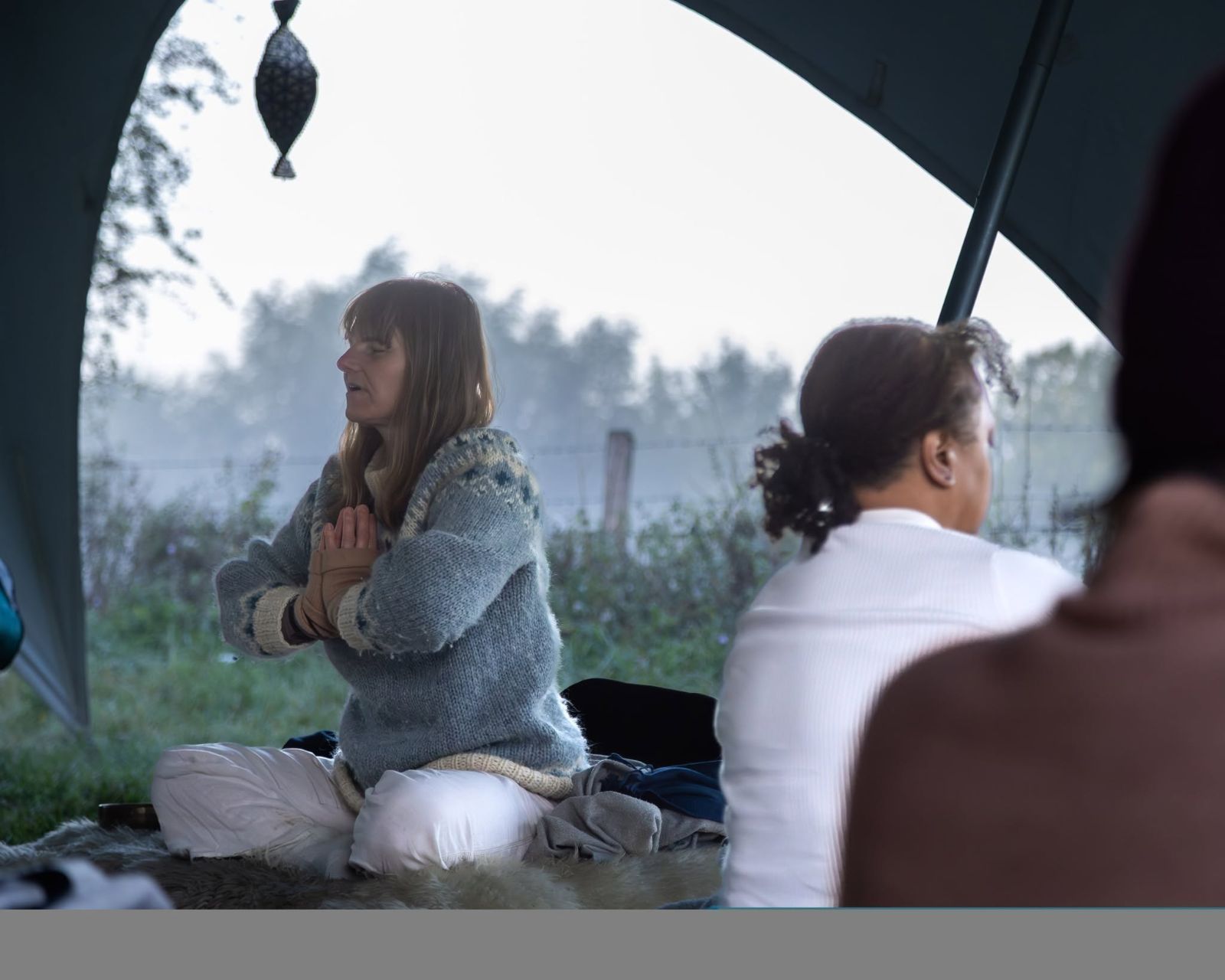
Your First Silent Retreat: What Really Happens, Day by Day
A day-by-day guide to your first silent meditation retreat: arrival, the hard days, the turning point, and leaving. Honest advice from a vipassana teacher.
Read · 3 min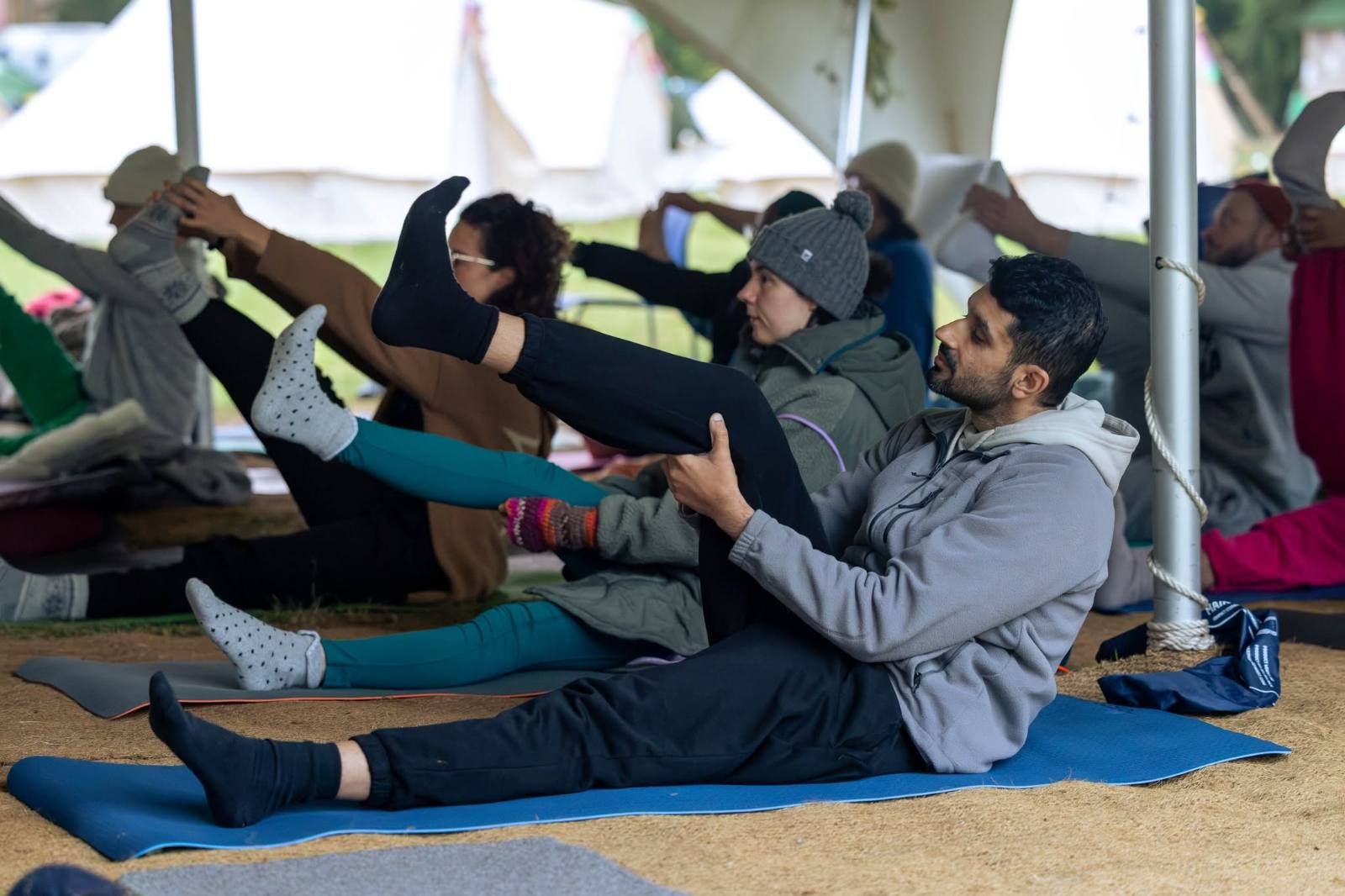
"A big distraction for me is the back pain from sitting in this posture. Is there anything you can do about that?"
I hear this on every retreat. Pain and the wandering mind are the two big obstacles at the start. The good news: pain you can work with. And it becomes one of your best teachers.
First, the practical side. Then, the meditation side.
You don't need to suffer for the sake of suffering.
Even my legs go numb sometimes. Teachers too.
Now the interesting part.
"Pain" is a label. A concept. When you look closely, what's actually there? Burning. Pressure. Twisting. Throbbing. Heat. These are the raw data, the real sensations.
In the noting practice, we note the process, not the concept. So instead of "my knee pain, my knee pain", you go into the centre of the sensation and note what's really there: pressure, pressure. Burning, burning. Heat.
Look how it moves. It gets stronger, weaker, shifts a little to the left, pulses. It's not one solid block of pain. It's a stream of changing sensations.
There's also the feeling tone: unpleasant. That's another foundation of mindfulness, vedanā. Note it: unpleasant, unpleasant.
And there's the mind's reaction: disliking, wanting it to stop, fear it will get worse. Note that too.
Often, most of the suffering is in the reaction, not in the knee. The mind as a character: "Oh, this knee. It's going to be damaged. They'll probably have to amputate it." Don't worry. Nobody has ever had their legs cut off at a meditation retreat.
Stay with it. For non-chronic pain, you can make it your main object for a while. Go right into it, note it precisely, moment by moment. Every retreat, someone comes to me and says, "Whoa, I did this, and poof, it was gone."
Keep it secondary. Or, keep rising and falling as your main object, and include the sensation: rising, falling, heat. Rising, falling, pressure. When it's no longer pulling you, let it go.
If after a long, honest try the pain is still too strong, move mindfully. Note intending to move, lifting, moving, placing. Then continue.
When you learn to see pain as changing sensations that aren't "mine", something big shifts. The same skill works with emotional pain: anxiety, sadness, anger. Until you take it personally, it hangs around. Once you see it as a thing, the characteristics of the thing kick in. It arises. It passes.
So pain isn't a disturbance to your meditation. Nothing is. The best time to practise is when you suffer the most, because then there's something real to practise on.
More on the method: noting meditation, step by step and walking meditation.
Practise this with a teacher, in silence, by the river. Seven days at Hardwick, 2027.
Book a placeHave a question about the practice? Ask Ananda, our Dhamma assistant.
A day-by-day guide to your first silent meditation retreat: arrival, the hard days, the turning point, and leaving. Honest advice from a vipassana teacher.
Read · 3 min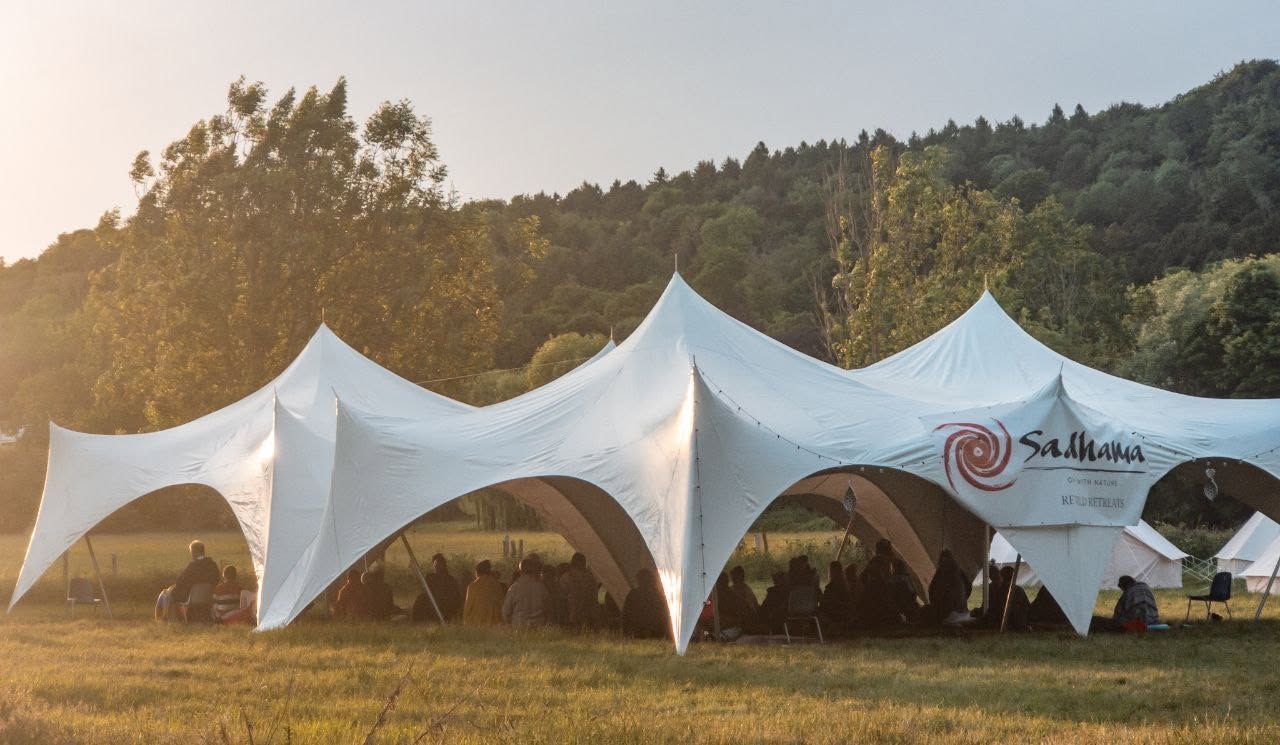
Looking for a silent meditation retreat near London? Our 7-day vipassana retreats are at Hardwick Estate in the Chilterns, 40 minutes by train from Paddington.
Read · 3 min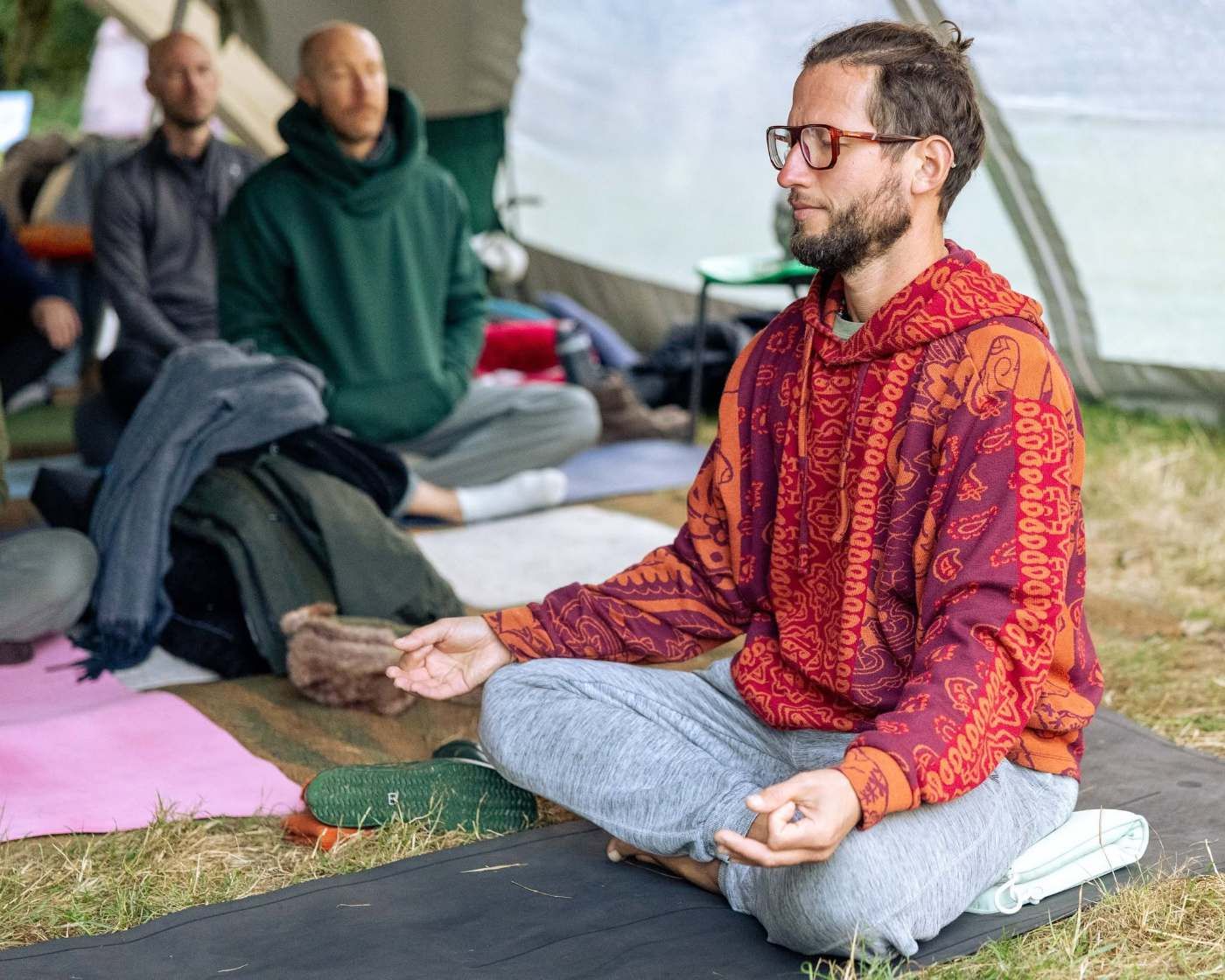
Never meditated? You can still do a silent vipassana retreat. A teacher answers the common worries: sitting, silence, emotions, sleepiness, and whether you'll "fail".
Read · 3 minNew dates, early-bird places and short teachings from Dmitry, a few times a year. No spam; unsubscribe any time.